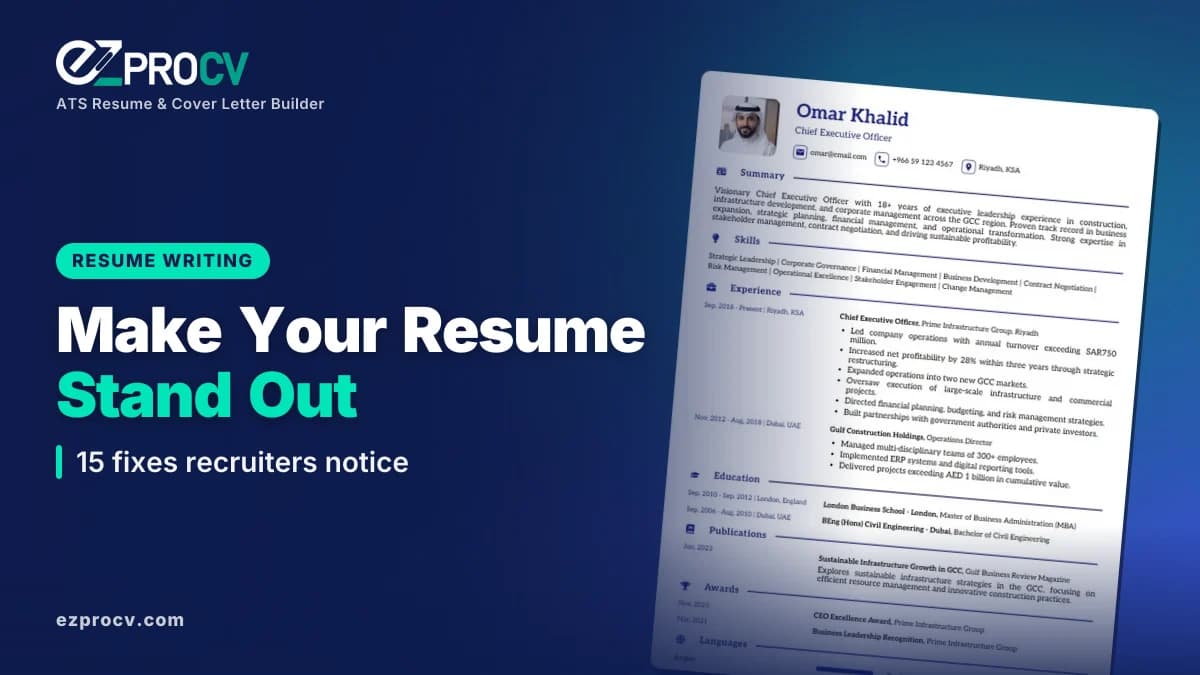
Quick answer: To make a resume stand out, tailor it to each job: put the target job title and your strongest matching skills in the top third, rewrite bullets as results with numbers, use the employer's own keywords, and keep the layout clean and single-column so both people and applicant tracking systems can read it. Skip graphics, photos (unless local custom expects one) and clichés.
Most advice on how to make a resume stand out boils down to "be impressive," which isn't much help when you're staring at a blank page. Recruiters don't shortlist the fanciest document. They shortlist the one where the evidence they need is obvious within a few seconds of skimming.
This guide gives you 15 specific fixes, grouped by the part of the resume they improve, with before/after examples you can copy. You'll also see what doesn't help (graphics, gimmicks, buzzwords), how the rules shift between the US, UK, Gulf and India, and a short checklist to run before you hit "apply."
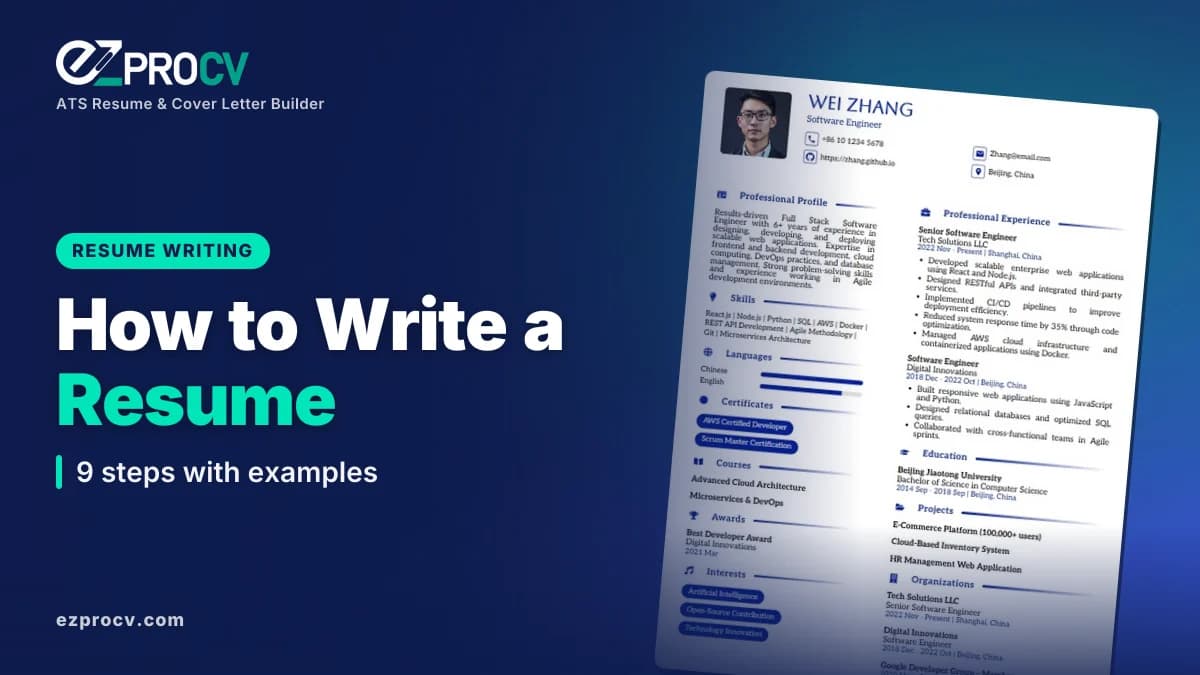
If you're starting from scratch, build the basic resume first with our step-by-step guide to writing a resume, then come back and use these tactics to sharpen it.
What makes a resume stand out to recruiters?
Three things, in this order:
- Relevance. The resume obviously matches this job, not jobs in general.
- Evidence. Claims are backed by results, numbers and specifics.
- Readability. The reader (and the software) can find everything fast.
Harvard's career office frames every line of a resume around one test: is it "written for people who / systems that scan quickly" (Harvard FAS Career Services)? It also lists "not demonstrating results" among the most common resume mistakes. Everything below serves one of those three goals.
How do you make the top third of your resume stand out?
The top of page one is where a skimming recruiter decides whether to keep reading. Make it do the most work.
1. Use a headline that matches the job title
Put a one-line headline under your name that uses the employer's job title (if it's honestly yours) plus your strongest proof point.
Before: Hardworking professional seeking new opportunities
After: Accounts Payable Specialist | SAP and Excel | 6 years in high-volume invoicing
2. Write a three-line summary aimed at this employer
Your summary should answer "why you, for this job?" in two to four lines: who you are, your best relevant result and what you bring.
Customer service team lead with 5 years in telecom support. Cut average handling time from 9 to 6 minutes across a 14-person team by rewriting call scripts and coaching new hires. Bringing Zendesk, Salesforce and multilingual (English, Hindi, Arabic) support experience to a high-volume contact center.
3. Add a short skills line that mirrors the job ad
List the six to ten hard skills the posting asks for that you genuinely have, using the ad's wording. MIT's career office notes that a skills section "can be tailored to show employers your relevant technical skills" (MIT CAPD).
4. Keep contact details clean and complete
Name, phone, professional email, city and country, and a LinkedIn or portfolio link. Put them in the body of the page, not in a header or footer: Greenhouse's own help center lists contact details placed in a header, footer or text box as a cause of failed resume parsing (Greenhouse Support).
How do you make your work experience stand out?
This is where most resumes blend together, because they list duties instead of results.
5. Turn duties into results
Use the formula action verb + what you did + measurable result. MIT says "including a quantitative result makes your accomplishments more concrete and compelling," and adds that you shouldn't worry if you don't have exact numbers.
| Before (duty) | After (result) |
|---|---|
| Responsible for social media accounts | Grew Instagram followers from 2,100 to 9,800 in 10 months by planning a weekly content calendar |
| Handled customer complaints | Resolved 40+ escalated complaints a week, keeping the team's satisfaction score above target for 3 straight quarters |
| Did month-end reporting | Cut month-end close from 8 to 5 working days by automating reconciliations in Excel |
| Helped with recruitment | Screened 300+ applications and scheduled 60 interviews for a 12-person store opening |
6. Show scope when you can't show a result
Not every job produces a percentage. Scope works too: how many, how much, how often, for whom.
Managed front desk for a 120-room hotel, checking in up to 90 guests a day across a team of 4
7. Order bullets by relevance, not chronology
The bullet that best matches the new job goes first in each role, even if it was a small part of your week.
8. Give relevant "small" jobs real space
The UK government's JobHelp service puts it plainly: "Don't be afraid to make a big deal of a small job if it's more relevant to the role you're going for" (JobHelp). A part-time retail job can deserve three bullets if you're applying for a sales role.
9. Replace clichés with proof
"Team player," "detail-oriented" and "results-driven" appear on so many resumes that readers skip them. Show the trait instead.
Instead of: Detail-oriented and highly organized
Write: Audited 1,200 supplier records and corrected 85 duplicate payments before year-end
How do you use keywords to stand out without stuffing?
Many employers use an applicant tracking system (ATS), software that stores applications and lets recruiters search them. If your resume doesn't use the words the recruiter searches for, it may not surface at all.
10. Mirror the job ad's exact wording
If the ad says "accounts receivable," don't only write "AR." If it says "stakeholder management," use that phrase where it's true. JobHelp's advice is simply: "Start spotting key words."
11. Put keywords where they carry proof
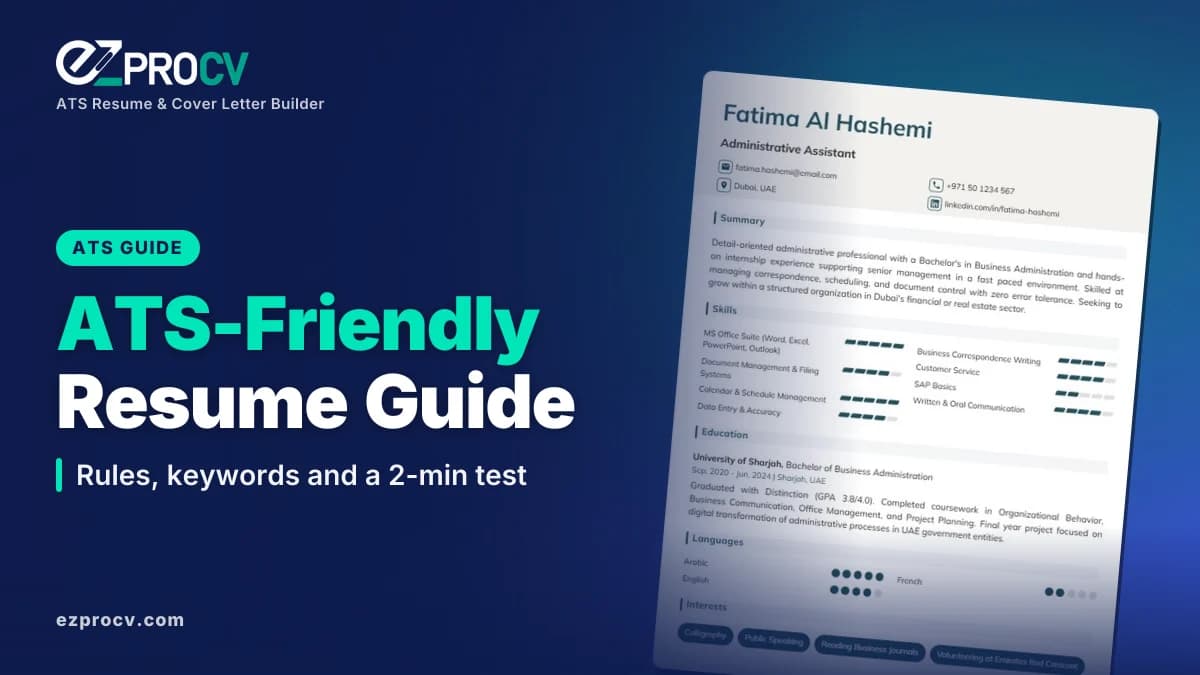
A keyword in a bullet with a result is worth more than the same word in a list. Use each important term in the skills section and again in at least one bullet that shows you using it. For a fuller method, see our guide to making your resume ATS-friendly.
Built weekly Power BI dashboards tracking inventory turnover for 35 stores, used by regional managers to cut overstock by 12%
Does resume design help you stand out?
Yes, but not the way people think. A clean, consistent design stands out because so many resumes are cramped or cluttered. Decoration doesn't.
12. Use a single-column layout with clear headings
MIT warns that "ATS may struggle with reading tables, columns, graphics, and images." Standard headings like "Experience," "Education" and "Skills" help both software and people find sections.
13. Be consistent and leave white space
One font, one date format, aligned dates, the same bullet style throughout. MIT suggests margins of at least 0.5 inches, ideally 0.75, and warns: "Don't shrink the font to fit more content."
14. Send a text-based PDF (unless told otherwise)
A text-based PDF keeps your layout intact. Check by trying to select and copy the text: if you can't, the software probably can't read it either. If the job ad asks for Word, send Word.
What doesn't help
| Looks like it helps | Why it doesn't |
|---|---|
| Skill rating bars and stars | "4/5 in Excel" means nothing to a reader and is unreadable to an ATS |
| Icons, infographics, charts | Often lost in parsing; take space from evidence |
| Two or three columns | Text can be read in the wrong order |
| A photo (in the US, UK, Canada) | Harvard lists "include a picture" under its don'ts |
| Unusual fonts or colored backgrounds | Hurt readability on phones and printouts |
| A long list of soft skills | Unprovable without examples |
How do you make a resume stand out with little experience?
15. Add a section that proves what you can do
If your work history is short, give space to evidence from elsewhere:
- Projects: coursework, personal or volunteer projects with a clear outcome
- Certifications: recent, relevant and named exactly as the issuer names them
- Volunteering and leadership: clubs, events, community roles
- Portfolio or GitHub link for design, writing and technical roles
Project: Built a budgeting web app in React for a student society; 150 members now log expenses through it each month
Browse our resume examples by job to see how people in your field present experience, skills and projects. The student resume example is a good model if you're early in your career.
Do the rules change by country?
The tactics above work everywhere, but local expectations decide what "standing out" looks like.
| Market | What helps you stand out | What to avoid |
|---|---|---|
| United States and Canada | 1–2 page resume, quantified bullets, strong summary | Photo, age, marital status |
| UK and Ireland | 2-page CV, tailored personal statement | Photo, date of birth, nationality |
| UAE, Saudi Arabia, Qatar | Clear nationality, visa status and notice period; photo is common | Missing availability details |
| India and Pakistan | Clear degree details, technical skills, internships for freshers | Long "biodata" personal sections |
| Australia | Detailed achievements, referees section is common | Overly short, one-line roles |
In the UK, the National Careers Service says "you should not include your age, your date of birth, whether you're married or your nationality" (National Careers Service). Gulf employers often expect some of those details, which our UAE resume format guide covers. Canada's Job Bank advises you to "limit your resume to two pages" (Job Bank).
Common mistakes that make a resume blend in
- One resume for every job. Untailored resumes read as generic, however well written.
- Duties copied from the job description. That tells the reader what the job was, not how well you did it.
- Burying the best result. If your strongest achievement is the fourth bullet in your third job, move it up or into the summary.
- Too long or too dense. Job Bank suggests keeping each section to 5–7 bullet points.
- Typos and inconsistent formatting. These stand out for the wrong reasons.
- Exaggeration. Inflated titles or numbers can unravel at the interview or reference check.
A 10-minute stand-out checklist
Run this before every application:
- Headline uses the job's title (where it's honestly yours)
- Summary names this kind of role and includes one result
- Skills section mirrors the ad's wording for skills you really have
- Top bullet in each role is the most relevant one
- At least half your bullets include a number, scope or outcome
- No clichés without proof
- Single column, standard headings, consistent dates
- Contact details in the body, not the header
- Text-based PDF, file named "Firstname-Lastname-Resume.pdf"
- Spell-checked and read aloud once
Build it in EZProCV
Pick one of the ATS-friendly, single-column resume templates and write each section with a live preview that matches the downloaded file. You can adjust fonts, colors and spacing, import an existing PDF or DOCX resume to tailor it, and download a text-based PDF free. Gulf applicants can switch on optional fields for photo, nationality, visa status and notice period.
Sources
- Harvard FAS Career Services: Create a strong resume
- MIT CAPD: Crafting an effective resume
- Greenhouse Support: Unsuccessful resume parse
- JobHelp (UK government): Tailoring your CV
- National Careers Service: CV sections
- Job Bank (Government of Canada): Write a good resume
Frequently asked questions
Should I use color to make my resume stand out?
A little color is fine: one accent color for your name and section headings looks modern and prints well. Avoid colored backgrounds, light gray text and color-coded skill charts. They reduce contrast on phones and printouts, and they add nothing a recruiter can evaluate. Content, not color, is what gets you shortlisted.
Is a creative or infographic resume a good way to stand out?
Usually not. Greenhouse, a widely used applicant tracking system, lists graphics, columns, tables and text boxes among the reasons a resume fails to parse. If you work in design, show creativity through a portfolio link and keep the resume itself readable. A plain document with strong results stands out more than a decorated one.
How do I make my resume stand out if I'm changing careers?
Lead with a headline and summary that name the new target role, then a skills section built from the new job's requirements. In each past role, put the transferable results first, such as budgets managed, people trained or processes improved, and cut duties that only matter in your old field. Relevant courses and projects can sit above older experience.
How many times should I tailor my resume?
Once per application, but it shouldn't take long. Keep a master resume with every role, bullet and skill, then for each job adjust three things: the headline, the summary and the order of bullets and skills. That usually takes 10 to 15 minutes and makes the resume read as if it was written for that employer.
Does a cover letter help a resume stand out?
It can, especially when the employer asks for one or when your resume needs context, such as a career change, a relocation or a gap. Use it to connect your two or three strongest results to the employer's needs in plain sentences, not to repeat the resume. Keep it to one page.